

If your front door is uPVC or composite, it most likely locks with a euro cylinder, and many standard euro cylinders can be snapped. The good news is that you can check your own lock in a few minutes. If it does need upgrading, that is usually a straightforward cylinder swap rather than a new door. Here is how to tell whether your lock is at risk or already meets the security standards that matter.
What Is Lock Snapping?
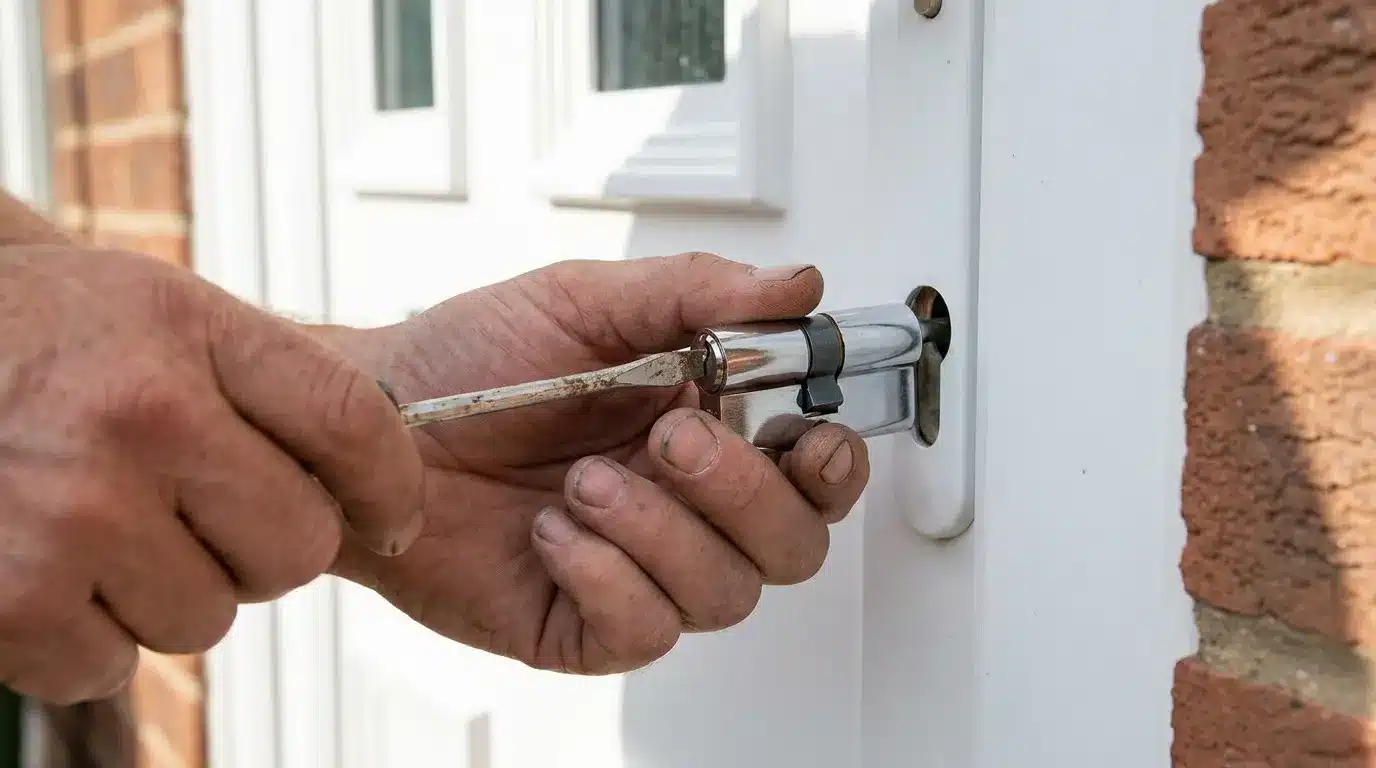
Lock snapping is a forced attack on a standard euro cylinder, the barrel-shaped part of the lock your key goes into. The cylinder is broken at its weak point so the lock can be turned without a key. It targets the cylinder rather than the door itself.
Most uPVC and composite doors rely on euro cylinders, as do some timber and aluminium doors, which is why it is worth checking what you have.
Why the Euro Cylinder Is the Weak Point
Many homeowners assume a solid door means a secure door, but the cylinder is often the weakest link. It is held in place by a single fixing screw through its centre, and on a standard cylinder the metal around that point is the weak spot.
On uPVC and composite doors, the cylinder also operates the whole multipoint mechanism: the hooks, rollers and deadbolts along the edge of the door. So a door with plenty of locking points is only as secure as the cylinder that controls them.
An anti-snap cylinder is designed to resist this type of attack, so it is worth checking what is fitted to your door.
Which Doors Use a Euro Cylinder
Euro cylinders are not just found on uPVC and composite front doors. They are also fitted to many back doors, some timber and aluminium doors, and French and patio doors.
You probably have one if you lift the handle and then turn the key to lock the door, or if there is a keyhole on both the inside and the outside. Traditional timber doors with a separate mortice keyhole and a lever key use a different type of lock that is not attacked this way.
If you are not sure what is on your doors, Ricky and the team can identify it for you and tell you whether it needs upgrading.
How to Check if Your Lock Is Anti-Snap
There are three quick checks you can do without taking anything apart: look for the right markings, see how far the cylinder sticks out and, if you still cannot tell, get it checked.
Look for the Kitemark, Stars or Sold Secure Diamond
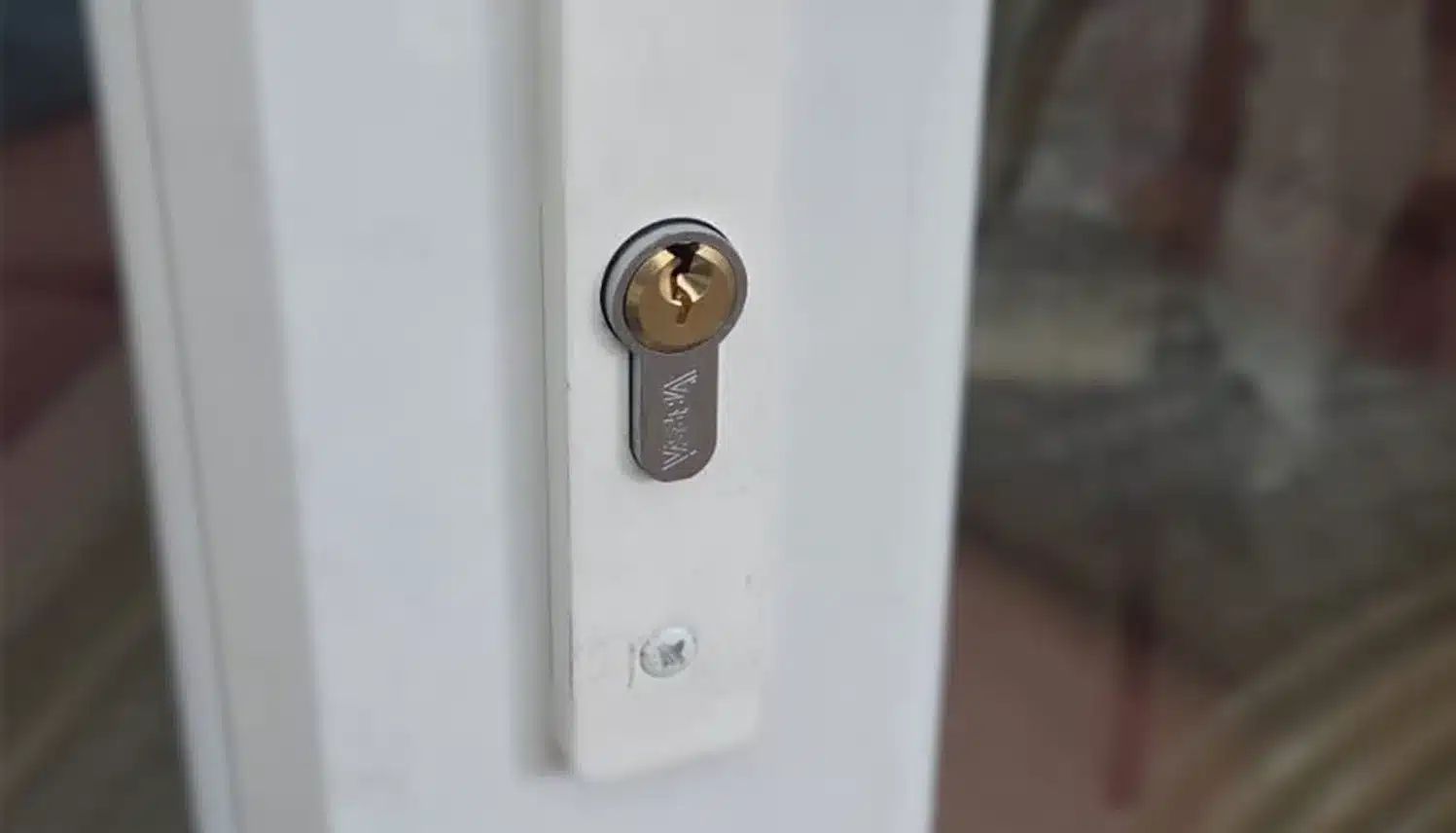
Look closely at the face of the cylinder, where the key goes in. The markings tell you how it has been tested:
- A BSI Kitemark with three stars: the cylinder meets TS007 3 star and resists snapping on its own.
- A Kitemark with one star: the cylinder is not snap resistant on its own. It needs 2 star security handles or a cylinder guard to reach the 3 star level.
- Sold Secure Diamond (SS312): an independent high-security rating for lock cylinders.
- No markings at all: treat it as a standard cylinder with no tested snap resistance.
Be wary of words like “anti-snap” or “insurance approved” on packaging. They are descriptions, not ratings. The Kitemark and stars, or a Sold Secure Diamond rating, are what count.
If you are unsure what you are looking at, take a photo and send it to Ricky and the team.
See How Far the Cylinder Sticks Out
Next, look at the door from the outside and check how far the cylinder sticks out. Ideally it should sit close to flush with the handle or escutcheon (the metal plate around the keyhole). If it protrudes noticeably, there is more for someone to grip.
A protruding cylinder is often just the wrong length for the door, which is a common result of fitting a replacement in the wrong size. If you want to fit your own, our guide on how to change a front door lock explains how to measure one properly. Otherwise, a correctly sized anti-snap cylinder deals with both problems at once.
If You Cannot Find Any Markings
Markings are not always easy to find. They can be worn, painted over or hidden behind the handle, and some are stamped on the side of the cylinder, which you can only see once it has been removed.
We would not recommend taking the cylinder out yourself just to check, because if it goes back in wrongly the door may not lock. Instead, send a photo to Ricky and the team and we will tell you whether it is anti-snap and whether an upgrade is worth it.
What TS007 3 Star Actually Means
TS007 is a technical specification developed by the Door and Hardware Federation and the Glass and Glazing Federation, supported by BSI and Secured by Design. Products tested to it carry the BSI Kitemark and a star rating.
For a door that resists snapping, the level to aim for is 3 star. There are two ways to get there, explained below.
How an Anti-Snap Cylinder Works
Many anti-snap cylinders have a deliberate break line near the front. If someone attacks the lock, the outer section snaps off at that line and the part that operates the lock stays protected inside the door. Some designs also block the mechanism once it has been attacked, while the lock can still be used from inside.
Higher-rated cylinders usually add resistance to drilling, picking and bumping as well.
3 Star Cylinder or 1 Star Cylinder With 2 Star Handles
There are two routes to the TS007 3 star level:
- A 3 star Kitemarked cylinder, which resists snapping on its own and can be used with any suitable handle.
- A 1 star Kitemarked cylinder combined with 2 star Kitemarked security handles or a cylinder guard.
Both parts of the second option must carry the Kitemark. A 1 star cylinder with ordinary handles does not meet the 3 star level. A 3 star cylinder is usually the simpler choice, because its protection does not depend on the handles.
If you are not sure which you have, check the markings on both the cylinder and the handle.
What Home Insurers Usually Ask For
Every home insurance policy is different, so the only reliable answer is in your own policy wording. Many policies specify lock standards for final exit doors, so check yours rather than assume.
On timber doors with a mortice lock, insurers commonly ask for BS3621, the British Standard for locks operated by a key from both sides. BS3621 is not a snap rating for euro cylinders, so it does not tell you whether a uPVC door lock is anti-snap.
If you are a landlord or letting agent, a change of tenancy is a sensible time to review the cylinders on your properties. See our locksmith service for letting agents for more.
When an Upgrade Is Worth It, and When Your Lock Is Fine
An upgrade is worth considering if:
- your cylinder has no markings
- it is a 1 star cylinder with standard handles
- it sticks out beyond the handle
- you have just moved house or lost a set of keys
- there has been a break-in nearby
Your lock is probably fine if it carries a Kitemark with three stars or a Sold Secure Diamond rating, sits close to flush and works smoothly.
In most cases an upgrade simply means swapping the cylinder, not replacing the door or the locking mechanism. An anti-snap lock upgrade is a quick job, and we will always tell you honestly if what you have is already doing its job.
Get Your Lock Checked by Locksmith Frith
Not sure what is on your door? Send us a photo or give us a call and we will tell you whether it is anti-snap.
We are a family run locksmith based in Burntwood, covering Lichfield, Cannock, Walsall and the surrounding Staffordshire and West Midlands areas. Every job is done by our own engineers, and we supply and fit TS007 3 star and Sold Secure Diamond cylinders. You get a price before any work starts, and quotes are free.
Get in touch to arrange a check or an upgrade. We also offer 24 hour emergency call-outs if you need us urgently.
Lock Snapping FAQs
Are Anti-Snap Locks Burglar Proof?
No lock is completely burglar proof. A TS007 3 star or Sold Secure Diamond cylinder is tested to resist snapping, and usually drilling, picking and bumping too, which removes a common weak point on uPVC and composite doors. Other things still matter, such as glazing, handles and patio doors, and we are happy to look at your door as a whole.
Can I Still Get In if My Anti-Snap Lock Is Snapped?
On many anti-snap designs, the outer section breaks away but the door stays locked, which is exactly what it is designed to do. The downside is that your key will no longer work from outside. If that happens, call a locksmith to get you back in and replace the cylinder. Ricky and the team offer 24 hour emergency call-outs and burglary repairs.
Do I Need Anti-Snap Locks on Back and Patio Doors?
Any door with a euro cylinder can be snapped, including back doors, French doors and some patio doors. Back doors are often less visible from the street, so they are easy to overlook. Check every external door with a keyhole on both sides, and check your insurance policy for any requirements that apply to them.
Can You Fit an Anti-Snap Cylinder to My Existing Door?
Usually, yes. Euro cylinders come in standard profiles and a range of lengths, so an anti-snap cylinder can normally replace a standard one without changing the door or the multipoint mechanism. It needs to be the right length so it sits close to flush. If the mechanism itself is worn, that is a separate repair, and we will tell you before any work starts. Send us a photo if you are not sure what is fitted.